
Updates & Blog
Southern State Foresters Welcome National Focus on Wildfire, Offer Proven Solutions from the South
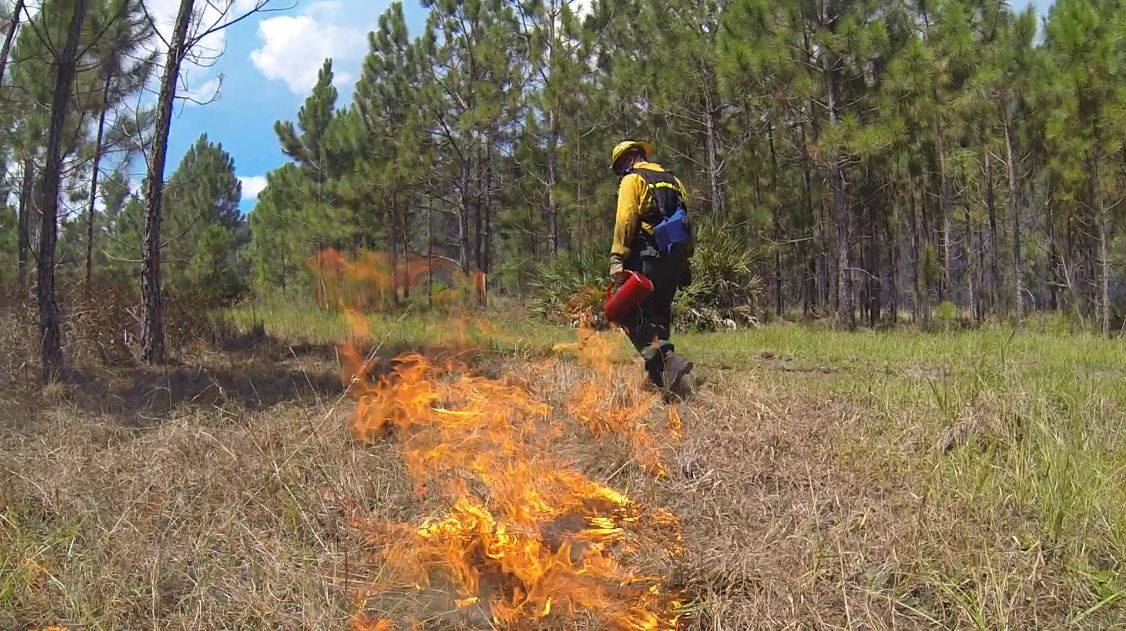
The Southern Group of State Foresters (SGSF) welcomes the Trump Administration’s emphasis on empowering state and local leadership in wildfire response. In the South, state forestry agencies have long delivered proactive, proven and community-focused wildfire strategies based on decades of on-the-ground experience. This is done in partnership with federal, other state and local agencies, as well as NGOs and other community groups.
- Southern states experience more wildfires each year than any other region in the country yet consistently keep average fire size well below the national average through early detection, rapid response and strong coordination with local partners.
- The South leads the nation in prescribed burning. In 2024, the Southeast treated 7.6 million acres with prescribed fire, a key tool in reducing wildfire risk in fire-adapted landscapes.
- State forestry agencies work closely with thousands of local fire departments in the South to train tens of thousands of first responders and ensure strong suppression capacity in every corner of the region.
- Southern state forestry agencies support one of the nation’s largest networks of Prescribed Burn Associations (PBAs). With 90% of southern forests under private ownership, PBAs demonstrate the high level of coordination and partnership required to manage wildfire risk at scale.
These proven southern approaches can serve as models nationally, offering efficient, community-centered solutions in the fight against catastrophic wildfire.
Regional Highlights:
| Alabama | The Alabama Forestry Commission conducts large-scale prescribed burning across the state to reduce wildfire risk and support forest management. Recent efforts in Gulf State Park, where AFC worked with partners to conduct burns in fire-adapted coastal landscapes, demonstrate how Alabama uses prescribed fire to protect rural communities and the natural resources they rely on. |
| Arkansas | Arkansas established an annual Prescribed Burn School that has significantly increased the number of trained burn technicians, building capacity for safe, effective large-scale prescribed fire across the state. |
| Florida | The Florida Forest Service treats an average of more than 2 million acres annually with prescribed fire across public and private lands, demonstrating large-scale, sustained implementation of proactive fire management to reduce wildfire risk and maintain forest health. |
| Georgia | Georgia has strengthened rural fire protection across the state through its Rural Fire Defense Lease Program, helping local departments exceed national fire response standards, lower insurance rates, and better protect both people and property. |
| Kentucky | Kentucky partnered with the Department of Fish and Wildlife to crack down on wildfire arson—cutting arson rates and putting offenders on notice. That enforcement freed up forestry crews to focus on prescribed fire and proactive wildfire prevention across the state. |
| Louisiana | Louisiana faced an unprecedented wildfire season in 2023, with over 400 wildfires burning around 60,000 acres, and successfully protected thousands of homes and structures, demonstrating strong coordination, readiness and response under extreme conditions. |
| Mississippi | Mississippi responded to 1,070 wildfires in FY23, holding the average fire size to just 19 acres and successfully protecting over 1,500 structures—a testament to the Mississippi Forestry Commission’s strong, front-line wildfire response across the state. |
| North Carolina | North Carolina has helped lead the growth of more than 130 prescribed burn associations across 22 states, showcasing how its public-private model is shaping wildfire mitigation strategies nationwide. |
| South Carolina | This year, the South Carolina Forestry Commission and partners responded to more than 1,000 wildfires during an active spring season, including major fires like the Table Rock Fire and Covington Drive Fire in the wildland urban interface. No homes were destroyed and no lives were lost. The agency’s award-winning “Cancel Wildfires in SC” campaign, which focused on reducing human-caused ignitions through targeted outreach and education, contributed to strong public awareness and was recognized nationally for its effectiveness with a Bronze Smokey Bear award. |
| Oklahoma | Oklahoma leverages the OK‑FIRE system, a nationally recognized fire-weather decision-support tool built on the Oklahoma Mesonet, to provide real-time fire weather forecasts and identify optimal burn windows for prescribed fire. Since its launch in 2006, more than 1,600 wildland fire managers have been trained on OK‑FIRE, strengthening both wildfire readiness and safe, effective fire use. |
| Tennessee | Tennessee’s Department of Agriculture Division of Forestry helped establish the state’s first Firewise USA® city in Bolivar, supporting defensible space planning, community cleanups, and local coordination to reduce wildfire risk. Wildfire mitigation specialists continue to assist communities statewide in preparing for and preventing wildfires. |
| Texas | Texas A&M Forest Service and local fire departments responded to over 5,000 wildfires in 2024, protecting almost 4,500 structures and approximately $570 million in property value. The response effort involved over 500 agency personnel and coordination with nearly 1,500 firefighters from across Texas and 42 other states. |
| Virginia | With growing development pushing deeper into forests, the Virginia Department of Forestry takes an aggressive, all-hours approach to fire suppression. Crews frequently operate at night, when cooler temperatures and higher humidity help slow fire spread. By combining night operations with proactive line preparation, VDOF works to contain wildfires quickly. |
The Southern Group of State Foresters (SGSF) is a 501 (c)(3) non-profit corporation representing state forestry agencies within the 13 southeastern United States, and the U.S. territories of Puerto Rico and the Virgin Islands. SGSF members collectively provide leadership, coordination, expertise and resources to sustain the economic, environmental, health and societal benefits of southern forests. This includes the delivery of regional support needed to address existing and emerging issues related to sustainable forest management, forest health, water resources, urban and community forestry, forest product markets, wildfire protection, conservation education and disaster response.
