Updates & Blog
6 Forest Health Threats to Watch in the Southeast
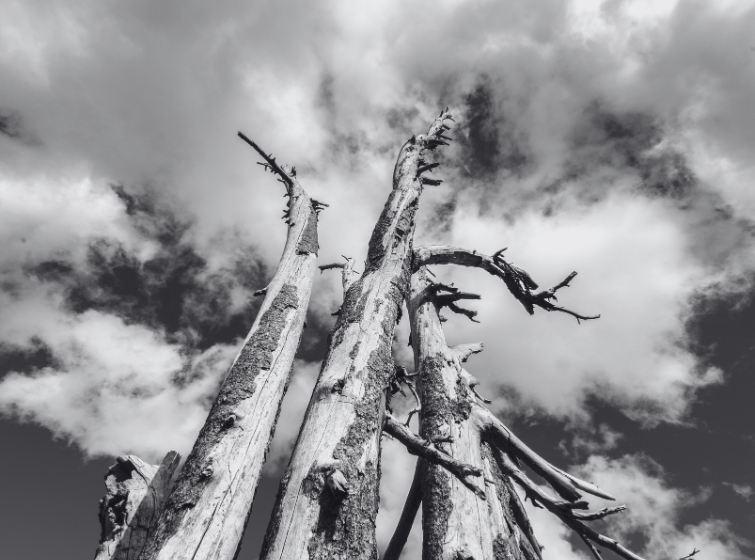
August is Tree Check Month!
Designated by the U.S. Department of Agriculture, Tree Check Month serves as a reminder that early detection is one of the most effective tools we have for protecting our forests. While the initiative focuses on encouraging landowners to inspect the trees in their own backyards, forestry professionals know that vigilance at every scale is essential to keeping forests healthy.
Across the American South, insects, diseases and invasive plants continue to challenge our trees and forestland. Some are long-standing threats that require ongoing management, while others are emerging issues expanding into the region for the first time. These issues threaten to alter native forest composition, reduce wildlife habitat, increase wildfire risk to communities, and create long-term management hurdles for landowners and natural resource professionals.
In recognition of Tree Check Month, we’re highlighting six of the most significant forest health threats affecting southern forests right now, and the work being done by state forestry agencies, the USDA Forest Service, researchers and partners to address the impacts.
1. Southern Pine Beetle
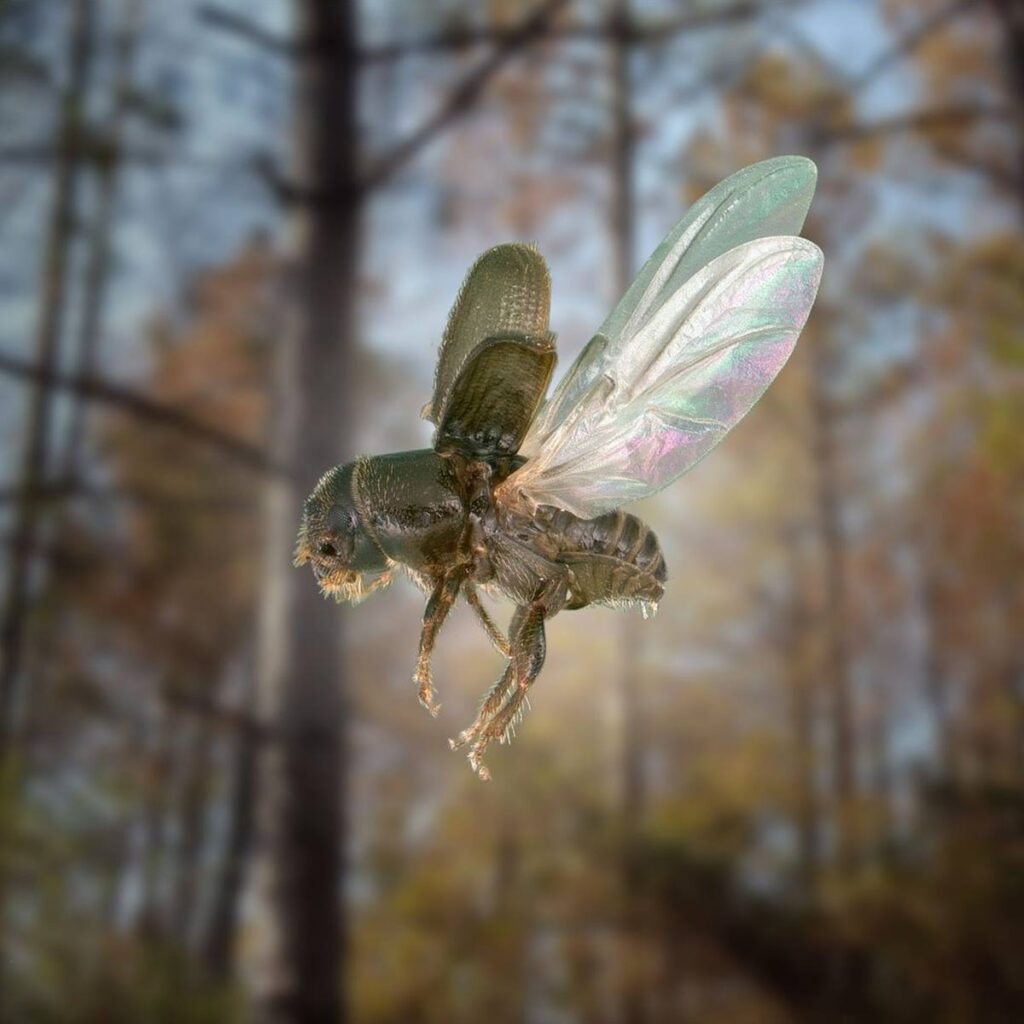
Southern pine beetle (SPB) is a native bark beetle in the South. Most landowners and forest managers are familiar with SPB because it can have a tremendous impact on southern yellow pine during outbreaks. In 2024, the South experienced its most significant outbreak in more than twenty years, primarily impacting Alabama and, to a lesser extent, Georgia and Mississippi. More than 30,000 acres of mostly plantation-grown loblolly pine were killed. In 2025, many of the same areas remained affected, but overall activity declined by more than 50 percent from the previous year. Annual spring trapping surveys conducted by state forestry agencies and the USDA Forest Service help forecast the likelihood of future outbreaks across the region.
What We’re Doing
The USDA Forest Service and the Southern Group of State Foresters have conducted the Southern Pine Beetle Prevention Program for the past 20 years. More than 1.4 million acres have been treated, primarily through state-administered cost-share programs involving approximately 18,000 landowners.Treatments include thinning and prescribed fire to maintain open forest conditions and restore forests that are less susceptible to SPB.
Additionally, the USDA Forest Service provides funding and technical expertise to National Forests to prevent and suppress SPB infestations. This helps mitigate further spread to surrounding areas, including private forestlands, which account for almost 90% of all forested acreage in the South. Landowners who suspect SPB activity should contact their state forest health specialist for more information about the SPB Prevention Program and available assistance.
2. Cogongrass
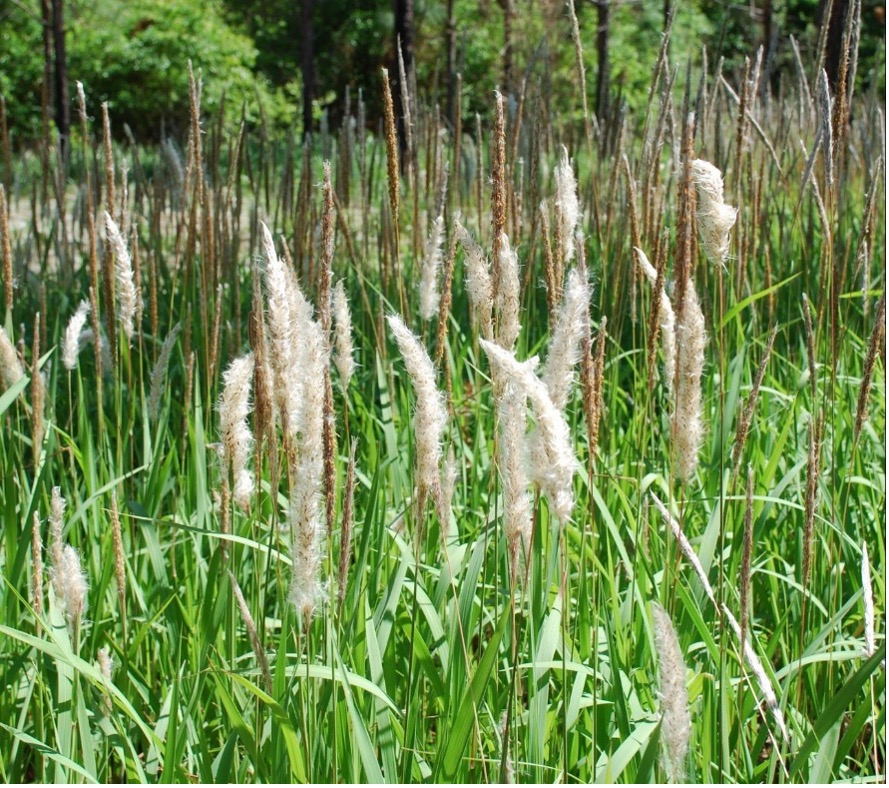
Cogongrass (Imperata cylindrica) is one of the most invasive plants natural resource managers encounter in the Southeast. It is regulated as a Federal Noxious Weed under the USDA APHIS Plant Protection Act. In 1912, cogongrass was introduced into the United States unintentionally as packing material via international shipments through Mobile, Alabama. Although cogongrass was once considered a potential forage crop and soil stabilizer, its high silica content and rough leaf blades made it unsuitable for livestock. Despite this, cogongrass (and ornamental varieties such as Japanese bloodgrass) continued to be planted in landscapes. By the early 1970s, it had become clear that it was an extremely aggressive grower and a serious problem for farmers and timber producers throughout the region.
Cogongrass threatens forests in two primary ways. Its dense root system forms thick mats that choke out native vegetation, reducing biodiversity. At the same time, the dense and flammable grasses cause wildfires to burn hotter and more intensely, threatening the safety of wildland firefighters and communities alike. Cogongrass is relatively easy to identify because it is one of the few grasses that flowers in the spring. Its white, fluffy seed heads can contain up to 3,000 seeds each, which are easily spread by wind, wildlife and uncleaned equipment. Roots and rhizomes can also be transported on equipment, creating new infestations. To date, cogongrass has been documented in 11 of the 13 southern states.
What We’re Doing
The USDA Forest Service works to control cogongrass on National Forest lands while partnering with state forestry agencies and agriculture departments to educate landowners about identification, treatment and prevention. Many southern states now administer cogongrass control or eradication programs for private landowners. Cogongrass has been a targeted species for state forestry agencies since the early 2000s, and SGSF forest health experts from across the region have repeatedly identified it as one of the region’s highest invasive species priorities. State forestry agencies are also developing a shared survey and treatment database to improve joint planning, early detection and rapid response efforts across state lines. Research into biological control options continues.
3. Emerald Ash Borer
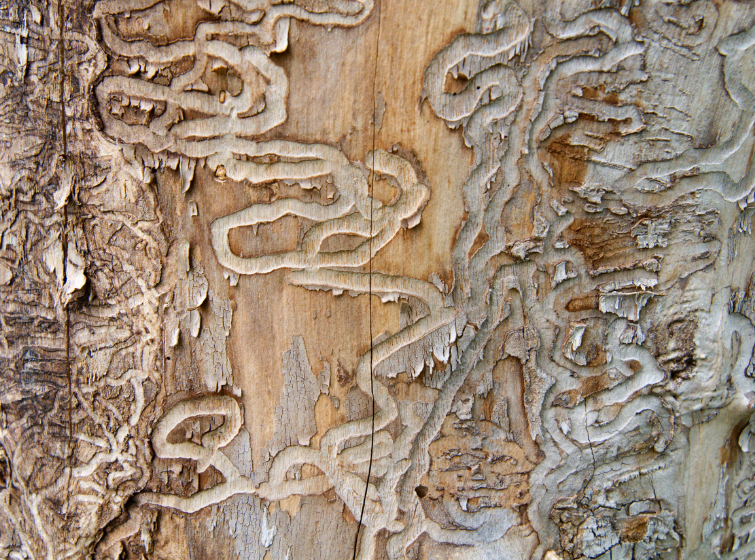
The rapid spread of emerald ash borer (EAB) throughout the Southern Region has continued since 2008. As of 2026, Florida remains the only southern state without a confirmed infestation.
All native ash species are susceptible, and approximately 99% of ash trees die within three to five years after becoming infested. Countless ash trees have already been lost throughout the region.
Ash is a common species in bottomland hardwood forests, wetlands, swamps, and riparian areas. The widespread loss of standing ash has significantly altered forest composition and increased downed woody debris in forest understories. Scientists are still working to fully understand the long-term impacts of ash decline on birds, pollinators and other wildlife.
What We’re Doing
Monitoring emerald ash borer at a fine scale is challenging because infestations begin high in the tree canopy, where they often remain unnoticed until significant damage has occurred. When detected early, insecticide treatments can protect select trees for two to three years per treatment. Several southern state forestry agencies provide assistance programs to help treat ash trees on public lands. Cost-share programs have also been developed to encourage treatment on private lands and to help municipalities, universities and historic properties preserve valuable specimen trees while safely removing hazardous ones.
Where chemical treatments are not practical, USDA APHIS and the USDA Forest Service release carefully selected parasitic wasps as biological control agents to help reduce long-term emerald ash borer populations. It is important to note that even after an ash tree dies, it can continue providing value. Forestry agencies are working with municipalities to develop Urban/Community Wood utilization programs that redirect ash wood from landfills into useful wood products.
4. Hemlock Woolly Adelgid
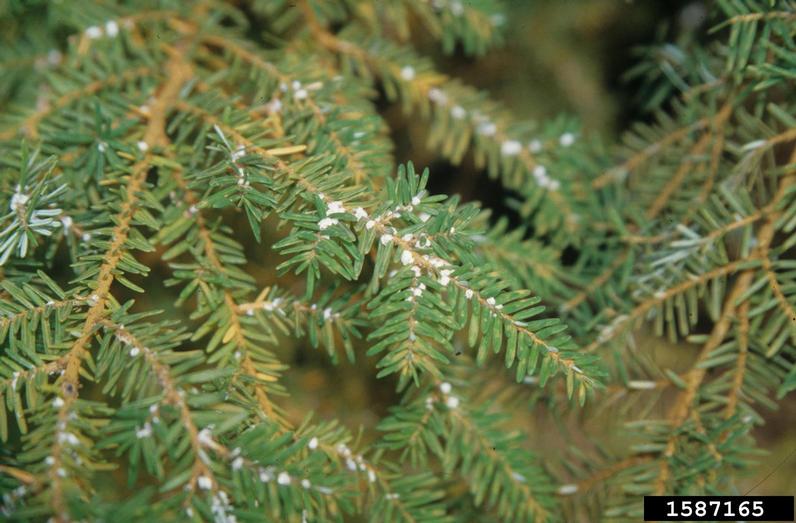
In the early 1950s, a small, aphid-like insect was first observed feeding on hemlock in Virginia. This insect, the hemlock woolly adelgid (HWA), Adelges tsugae, is native to Japan and China. Since its introduction, HWA has spread to 20 eastern states and two Canadian provinces, where it attacks eastern and Carolina hemlock. It is responsible for widespread hemlock decline and mortality throughout the eastern United States and continues to spread north, south and west from its original point of introduction. Today, hemlock woolly adelgid is considered the single greatest threat to the health and sustainability of hemlock forests in eastern North America. Its potential ecological impacts are comparable to those of spongy moth, Dutch elm disease and chestnut blight.
What We’re Doing
Management of HWA has relied on an integrated approach for more than two decades, led by the USDA Forest Service in partnership with federal agencies, state forestry agencies, universities and numerous conservation organizations. Management strategies include insecticide treatments, biological control, forest management practices and breeding hemlock trees with improved resistance. To date, several hundred thousand hemlocks have been chemically treated to help ensure their survival.
Scientists have also evaluated several biological control agents from Asia and western North America. Two species of predatory beetles and two species of silver flies have shown promise because they feed exclusively on adelgids. Before these insects are released, researchers are conducting extensive studies to ensure they will not negatively impact the broader ecosystem.
5. Beech Leaf Disease
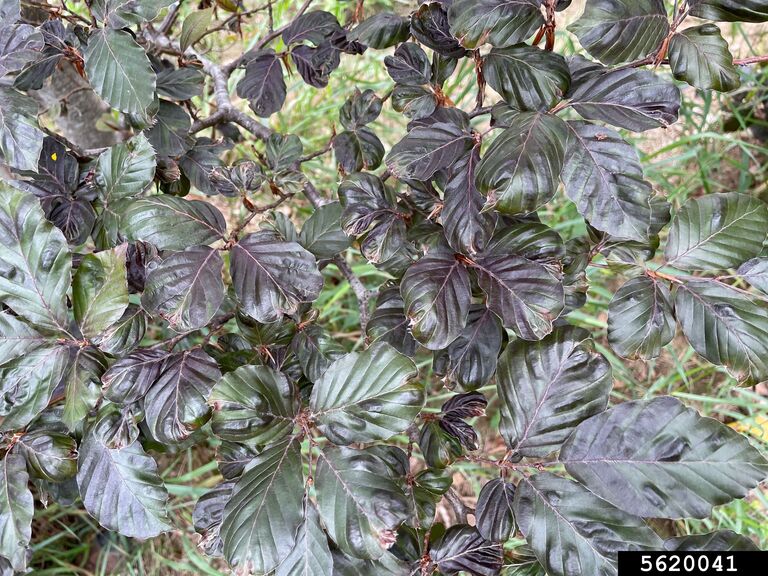
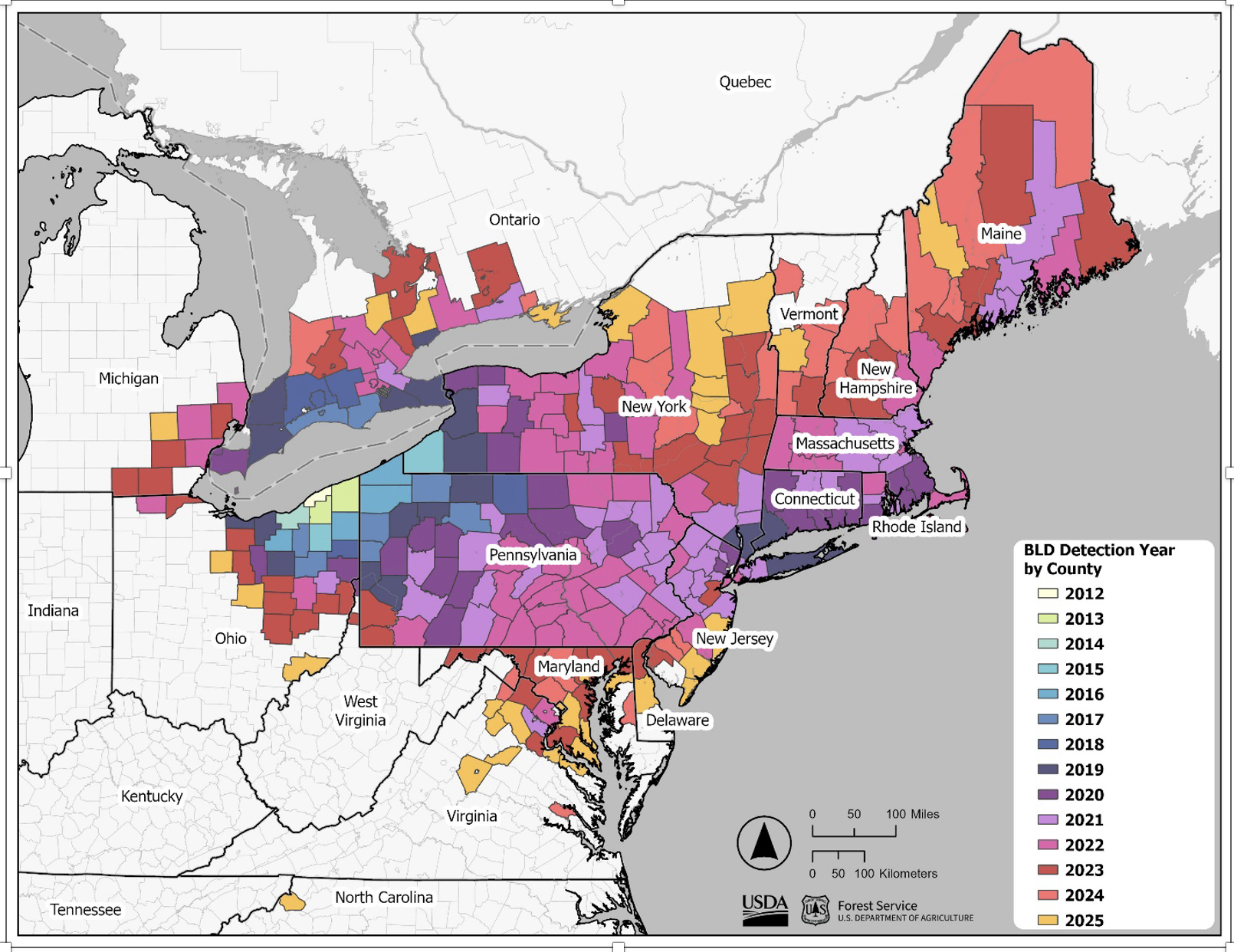
Across the northeastern United States, American beech (Fagus grandifolia) trees are experiencing severe decline from Beech Leaf Disease (BLD), caused by the parasitic nematode Litylenchus crenatae ssp. mccannii. The nematode colonizes developing leaves within overwintering buds, causing distinctive dark interveinal banding that persists throughout the growing season. As infections worsen, leaves become shrunken, distorted, and often fail to expand normally. Heavily infested buds may not flush in spring, while stressed trees often produce a second flush of small, stunted leaves later in the season.
Over time, repeated infections lead to canopy thinning, reduced growth, branch dieback and eventually tree mortality. First identified in Ohio in 2012, Beech Leaf Disease has spread rapidly throughout the Northeast and continues moving southward. As of 2026, it has been confirmed in more than a dozen counties in Virginia and North Carolina.
What We’re Doing
The USDA Forest Service and its partners are leading coordinated efforts to better understand and manage Beech Leaf Disease across the United States. Current research includes long-term monitoring of disease spread and severity, studies of tree physiology, international collaboration with Japanese researchers, evaluations of silvicultural and chemical treatment options, investigations into biological control, and research into breeding resistant trees.
Scientists are also studying how certain environmental conditions influence disease severity while expanding multi-state monitoring networks. As Beech Leaf Disease continues moving into the South, these efforts are providing critical information to strengthen early detection, improve monitoring programs and develop new management tools to support state forestry agencies and land managers.
Brown Spot Needle Blight
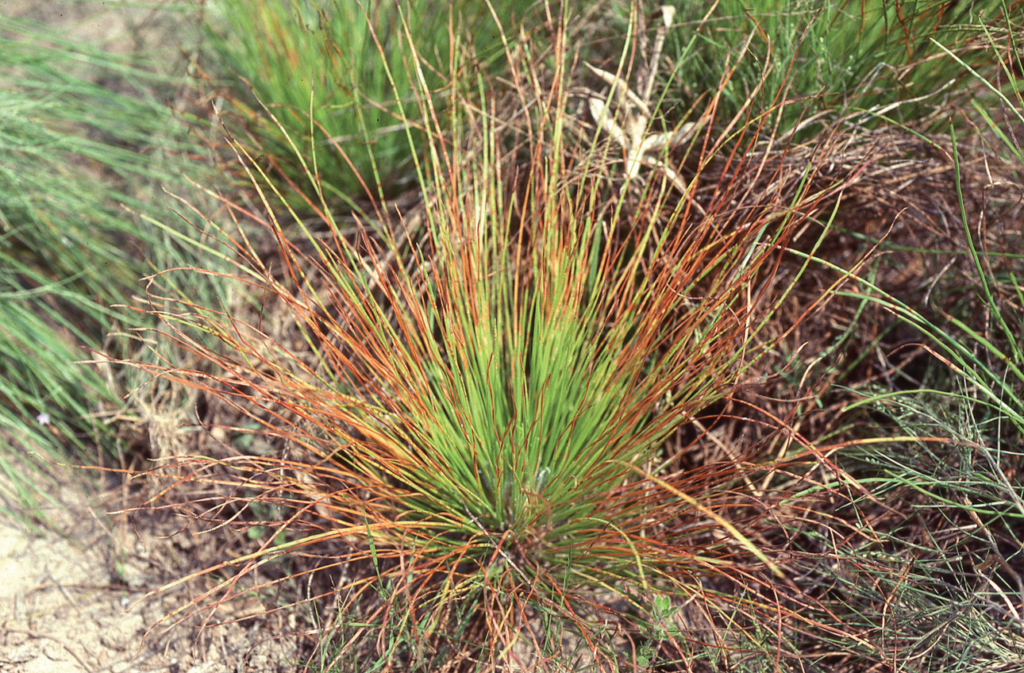
Photo by George Blakeslee, University of Florida.
Brown spot needle blight (BSNB) is emerging needle disease on loblolly pines in the southeastern states. The fungal pathogen, Lecanosticta acicola, has been known to cause severe damage on longleaf pines at grass stage, but is now becoming a serious threat to health of loblolly pines since 2016. BSNB on loblolly pines has been confirmed in 115 counties from nine states (AL, AR, FL, GA, LA, MS, SC, TN, and TX) while most severe cases were reported from AL, AR, LA, and MS with landscape scale damages on mature trees and/or localized damages on younger trees in commercial stands. Mortality and growth loss have been observed from the younger trees after repeated infections over multiple growing seasons. Infestations of Ips bark beetles also have been observed on the trees weakened by BSNB.
What We’re Doing:
The U.S. Forest Service is managing a county-level map to monitor distribution and occurrence of BSNB on loblolly pines. Since the disease is an emerging issue on loblolly pines, many aspects of this pathosystem are unknown, including population genetics of the pathogen, tree families resistant to BSNB and interaction of environmental conditions. Field observations suggest that certain tree families are less susceptible to BSNB, and Forest Service-FHP Resistance Screening Center in cooperation with University of Georgia is testing loblolly seedlings with different genetic background to identify resistant families. Researchers from universities, tree cooperative programs and the U.S. Forest Service in the southeastern states are investigating population genetics, risk model, remote sensing, long-term monitoring, silvicultural practices and data portal development that will provide critical information for BSNB management. Most of these studies are conducted through a regional pine needle pathogens research network funded by the USDA Forest Service.
Protecting Southern Forests Takes a Regional Effort
Forest health threats rarely recognize state or ownership boundaries. Whether the challenge is a native insect outbreak, an invasive plant or an emerging forest health threat, protecting southern forests depends on strong partnerships among state forestry agencies, the USDA Forest Service, universities, researchers and private landowners.
Early detection, active forest management, continued research and coordinated response efforts remain the best tools for protecting the South’s forests for future generations. By working together, forestry professionals across the region are helping ensure southern forests continue providing clean water, wildlife habitat, economic opportunity, and resilient landscapes for generations to come.