
Trees That Deliver.
Communities That Thrive.
On-the-ground forestry projects producing real, lasting benefits.
Across the South, forestry work is delivering real, on-the-ground results for the places people live, learn and gather. From restoring community trees and managing invasive plants to expanding canopy in schools, neighborhoods and campuses, these efforts show how commonsense forestry practices strengthen communities in practical, lasting ways. The stories featured here highlight projects supported by strong partnerships and smart investments, with benefits that are visible today and built to endure.
Success Stories from the South

SUCCESS STORY
Clarkston, Georgia
Learn MoreGeorgia State University Perimeter College redesigned parking lot landscapes on its Clarkston campus, planting hundreds of native trees to improve shade, air quality, stormwater management, and student learning.
SUCCESS STORY
Lexington, Kentucky
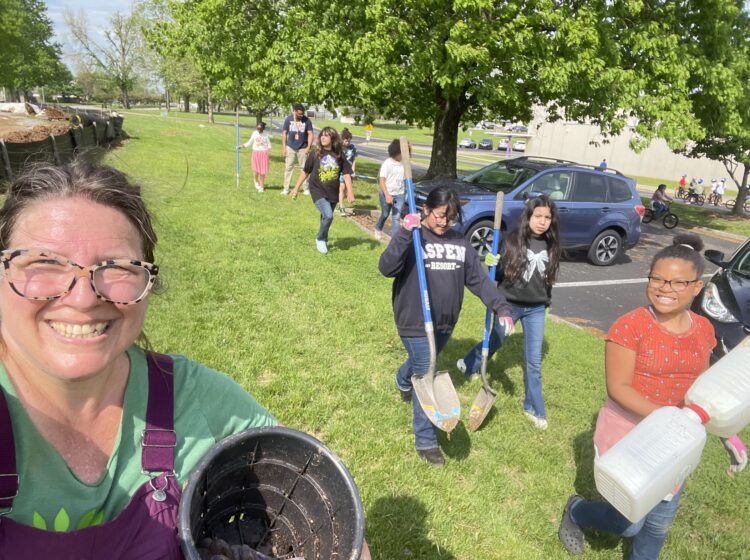
Learn MoreTrees Lexington is expanding tree canopy at 15 Fayette County public schools by planting hundreds of native trees and engaging students in hands-on learning that links trees to healthier school environments.
success story
Oklahoma City, Oklahoma
In southern Oklahoma City, OKC Beautiful worked with residents and volunteers to plant 400 drought-resistant trees, improving shade, neighborhood livability, and long-term tree survival through targeted outreach.
success story
Knoxville, Tennessee
Knoxville is restoring streambanks and public green spaces by removing invasive plants, replanting native trees, and partnering with local organizations to deliver long-term habitat and community benefits.
Clarkston, Georgia
Grant funding creates increased green space for better air quality, stormwater management and experiential learning

By Kristen A. Schmitt
To rejuvenate the Georgia State University Perimeter College’s (GSU-PC) Clarkston campus, the university recently combined grant money from the Georgia Forestry Commission’s (GFC) Trees Across Georgia (TAG) initiative, funded through the USDA Forest Service, with additional university resources for a project focused on improving the campus. Seth Hawkins and Lindsay Nuemann of GFC’s Urban & Community Forestry Program run the TAG program and provided technical information and assistance for the project.
Like many college campuses, the Clarkston campus had several sprawling surface parking lots where trees had been planted without any thought for sustained growth or survival. Limited soil volume in the parking lot islands left trees overgrown or dying. The project created additional and expanded available soil volume through additional planting medians to increase the number of sustainable tree root zones for long-term and healthy growth.
“It was a case of planting the wrong tree in the wrong place,” said Susan Hart. Hart recently retired as the senior director of finance, risk management and sustainability. She oversaw the Clarkston campus project, which was completed in May 2025, before retiring in June. “While we can’t do away with an asphalt parking lot completely, we can expand and redesign planting medians, reduce the number of impervious surfaces, and give replacement trees more room to grow so problems don’t happen again.”

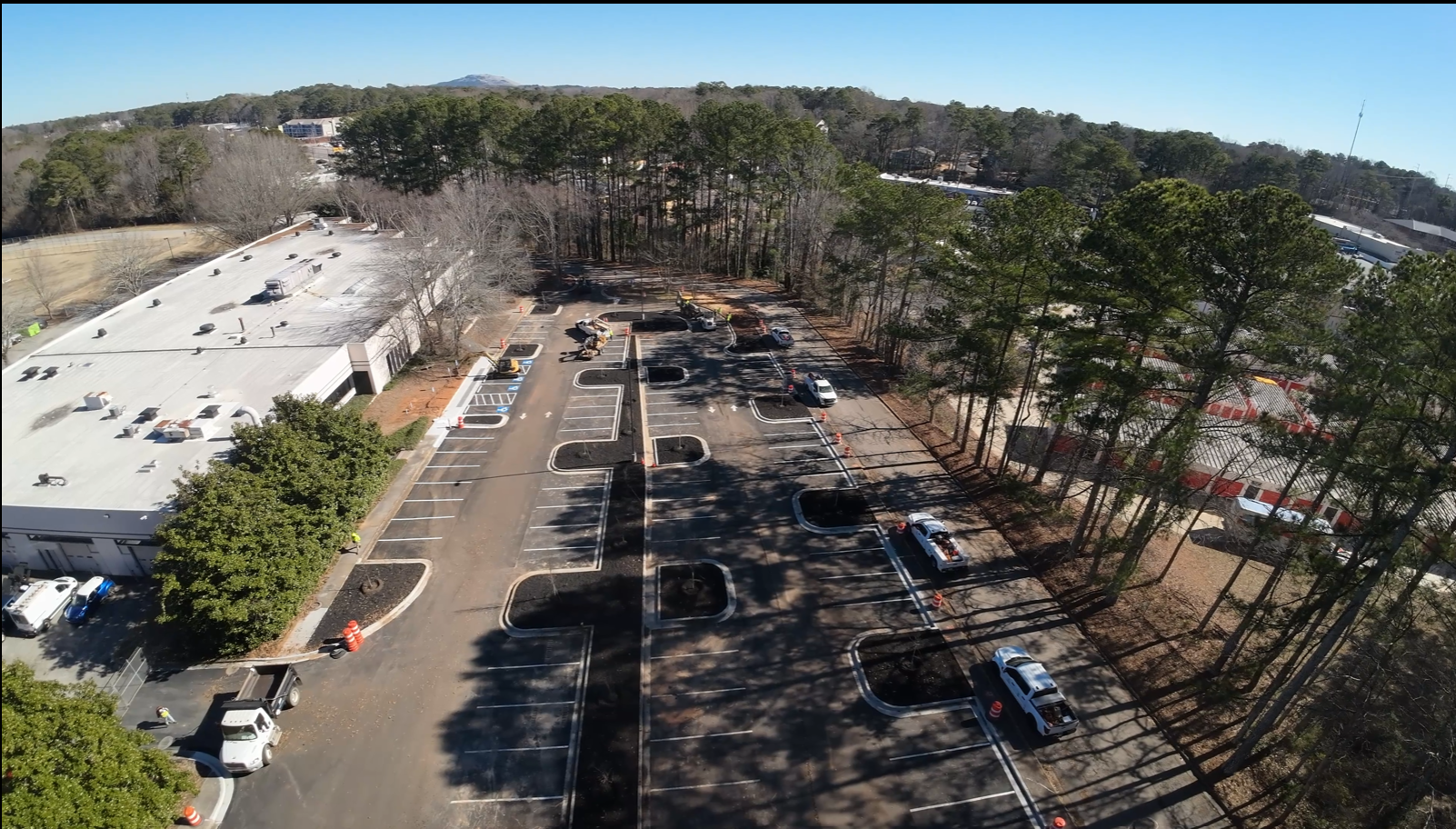
The university was awarded $500,000 in TAG funds, which was combined with university resources, and began the project in January 2024.
The Clarkston project occurred in a “very urbanizing, rapidly developing area that experiences extreme urban heat island effects,” according to Hawkins. Urban heat islands are a phenomenon in which urban areas are noticeably warmer than rural regions due to buildings and pavement absorbing heat and little to no green space available to naturally cool the area.
“The focus of the funding for this project was to create and expand available soil volume for sustainable tree growth, ensuring parking lot shade for the future,” noted Nuemann.
Over the course of the 17-month project, a landscaping sub-contractor helped recondition the soil for planting new trees and redesigned planting medians to expand them from 4-feet to 8-feet before the lots were resurfaced. Healthy trees were preserved, and 344 new trees were planted. TAG grant funds were specifically used for tree planting, limited impervious surface removal around areas where trees were planted, and soil improvements.
Lexington, Kentucky
Grant Helps Trees Lexington Grow More Trees at Fayette County Schools
By Kristen A. Schmitt
Jump to Social Media Resources
In Lexington, Kentucky, a new project is underway to help expand the area’s urban forest. According to Lexington’s 2022 Urban Tree Canopy Report Card, tree canopy coverage in Lexington hovers around 23 percent. Urban trees are one of the strongest defenses against heat, flooding and poor air quality and, with only about 23 percent coverage, Lexington is missing much of that protection.
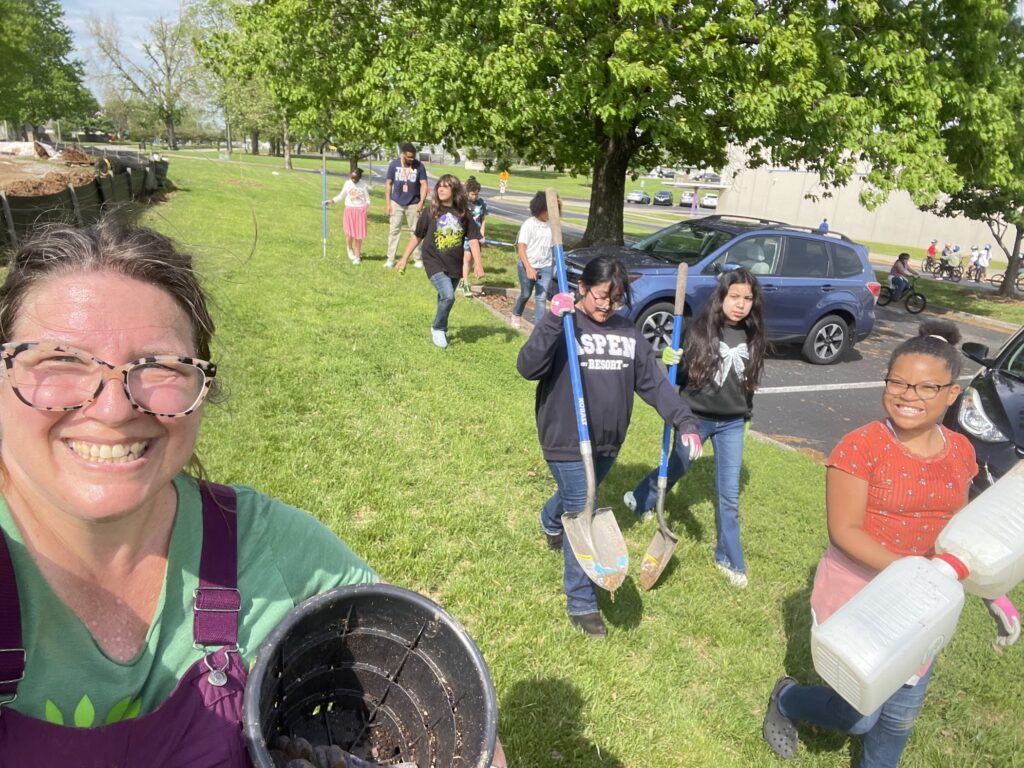
Enter Trees Lexington, a nonprofit dedicated to the growth and maintenance of Lexington’s urban tree canopy. The organization received a Kentucky Division of Forestry (KDF) Urban and Community Forestry Assistance Grant for $250,000 in September 2024, and is using it to improve tree canopy in Fayette County Public Schools by planting trees native to the area.
“One of the big reasons this project was selected was because of the impact it will have on getting kids educated and exposed to the importance of trees; since they’re going to be the future stewards who take care of them,” said Chris Wiedamann, KDF’s Urban and Community Forestry Program Coordinator.
Within the school district, schools on average have only about 12 percent tree canopy coverage, according to Michael Potapov, who serves as president of the board of directors for Trees Lexington. The project will increase the number of trees at 15 different schools within the district over the next three years.
“Kids are some of the most affected by heat and air pollution,” added Wiedamann. “Gaining tree canopy in and around where they spend the majority of their week, at school, is really substantial because trees provide so many benefits.”
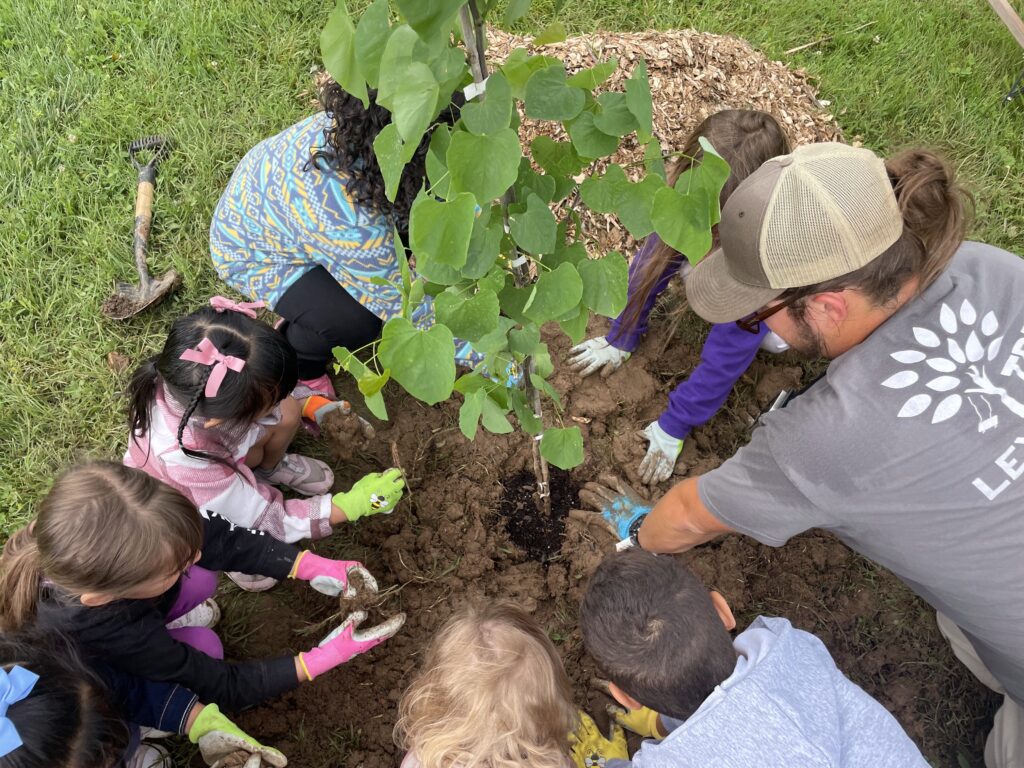
“For the first two years, we plan to plant 720 trees on the selected school campuses,” said Potapov, noting that some trees will be planted by the students, using young container trees with pre-augured holes. The first 163 trees were planted within the district in the spring of 2025 with another 150 trees in the fall. The nonprofit has also contracted with a landscaper to plant balled and burlaped (B&B) trees – field-grown trees with stronger root systems that are dug up with a large ball of soil around their roots before being wrapped in burlap for transport.
“We get both the instant gratification with the larger B&B stock and the student engagement with the smaller trees,” said Potapov, adding that “in addition to the more regularly available species like various oaks, tulip poplars, and hophornbeams, we’re also planting American basswood, hoptree, cucumber magnolia and sugarberry.”
Oaks, coffee trees, yellowwoods and blackgums were chosen because they’re readily available. Trees are obtained from a local nursery in Kentucky as well as Indiana, though Potapov notes that variety is key when it comes to a healthy urban forest.
“We have a great diversity of species,” noted Potapov. “I think there’s about 30 species that are going to be planted With monocultures or a limited number of species, we really run the risk of our urban forests getting into trouble with pests and disease, so if we can diversify as much as possible, that really helps.”
The trees will be maintained by Trees Lexington through a volunteer crew that will ensure the trees are well-watered and mulched. The nonprofit uses arborist’s chips for mulching. Arborist’s chips are fresh, natural wood chips gathered from tree trimmings that contain a mix of branches, leaves and bark. They are nutrient-rich and decompose slowly. Using them improves soil health, helps trees retain moisture and assists at controlling weeds.
To boost the educational component of the project, Trees Lexington and Fayette County Public Schools also brought in Bluegrass Greensource, which provides environmental education, resources and outreach to Central Kentucky. At the Fayette County Public Schools, that means hands-on activities that teach about the importance of native trees and their ecological benefits.
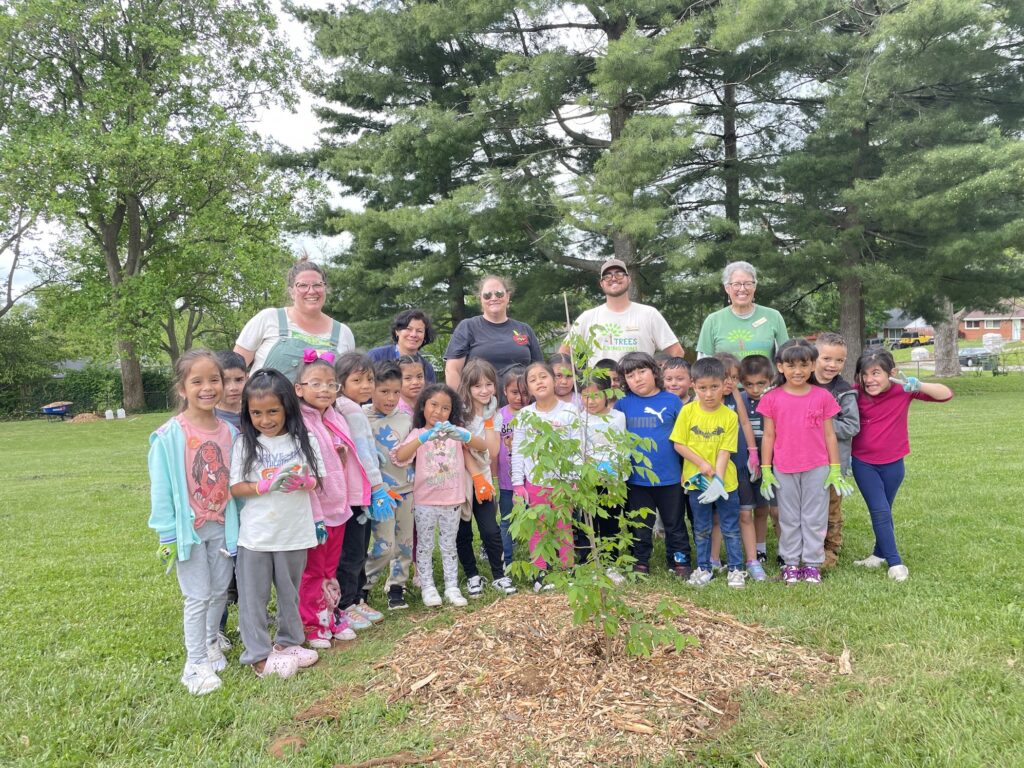
“For our middle school groups,” said Rachel Patton, educational director at Bluegrass Greensource, “we’ve completed measurements of the trees to calculate some of those benefits like energy savings or stormwater runoff so they can think about how beneficial trees are and how great it will be to have more trees on campus.”
Other activities include tree walks, stormwater mapping, and impervious surface improvement projects, such as figuring out tree placement in parking lots.
“For a lot of these students in urban areas, just being able to get out and explore the nature that’s around them is really important,” said Patton. “Overall, it’s about raising awareness to empower young people so they can make informed environmental decisions, and it starts with that foundational awareness.”
“Anytime you come in and plant 20, 30, 40 trees on a campus that previously had very few, it just changes the landscape,” said Potapov. “It’s when you can transform that space from a grassy field into something of interest where there’s actually something to go look at, that’s the immediate benefit.”
