
Updates & Blog
National Wildland Firefighter Week of Remembrance: Grief, Memory and Support for the Wildfire Community
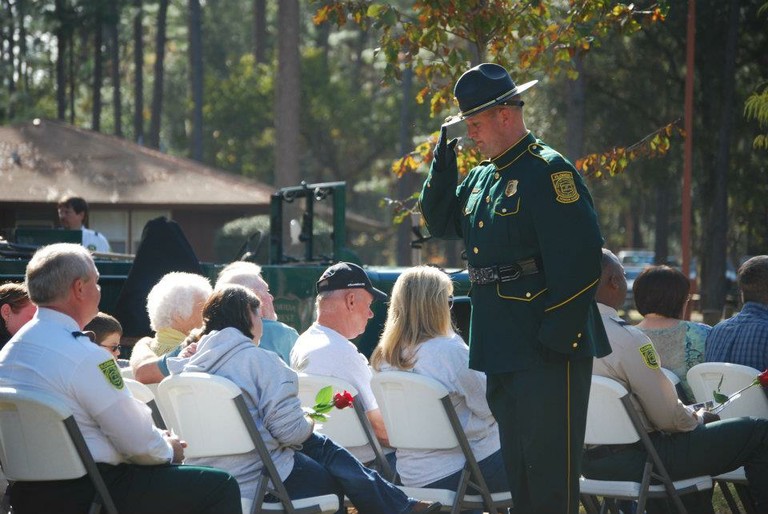
Honoring Those We Lost, Supporting Those Who Carry Their Memory
This year, National Wildland Firefighter Week of Remembrance arrives under heartbreaking circumstances. Just days ago, the wildland fire community lost three more of its own. Emily Barker, Nick Hutcherson and Sydney Watson died responding to the Snyder Fire near the Colorado-Utah border. Two of their fellow firefighters were seriously burned. The news moved through the wildfire world the way it always does… fast and like a gut punch – a fresh reminder that behind every wildfire, there are people who choose time and again to put themselves between danger and the rest of us.
From June 30 through July 6, firefighters, foresters, families and agencies across the country pause to honor every wildland firefighter who has died in the line of duty. There will be memorial ceremonies, moments of silence, stories told and retold. But anyone who has lived through this kind of loss knows the truth underneath the observance: grief doesn’t end when the week does.
For many in this profession, remembrance isn’t simply a designated time on the calendar. It’s a locker that still sits empty. A piece of advice from a mentor that still runs through your head on a challenging assignment. A silence on the radio where a familiar voice used to be. A family that will never be quite the same again.
The memorial service ends but grief does not.
Grief Doesn’t Follow a Calendar

Wildland fire isn’t like most jobs. Crews often stay together for days and weeks at a time. They eat together, sleep in the dirt together and trust each other with their lives. That kind of closeness, forged under hardship, tends to turn coworkers into something more akin to family. Which is exactly why a line-of-duty death never stays contained to one crew or one incident. The impacts are felt far and wide, and in ways that are nearly impossible to explain to someone who hasn’t lived inside this work.
U.S. Wildland Fire Service Chief Brian Fennessy put it simply after the Snyder Fire: “The loss we experience here is not felt by just one agency. It is felt by an entire wildland fire community. We grieve together, we support one another and we continue the mission together.”
A death on the fireline never belongs to just one crew, one agency or one state. It moves through an entire profession bound together by purpose and sacrifice. For those left behind, grief rarely arrives on schedule. Sometimes it hits immediately. Sometimes it waits months, then resurfaces out of the blue. There’s no prescribed timeline for grief and there is no one right way to carry it.
Remembering More Than the Last Day
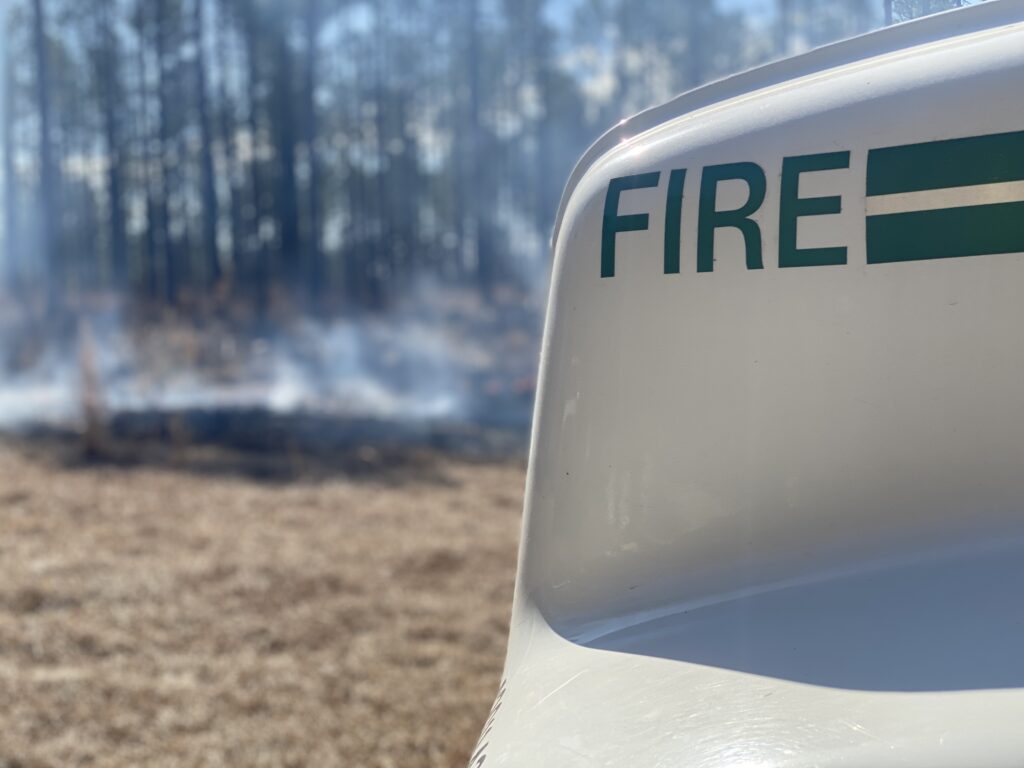
During this Wildland Firefighter Week of Remembrance, we reflect upon the ultimate sacrifice. But it’s also worth holding onto the life that came before it. A firefighter’s legacy isn’t defined by how they died. It’s written in how they lived, how they showed up for the people around them and the lives they quietly shaped along the way.
One of the truest ways to honor someone is to keep telling their story and to pass along what they taught you. Keep up the traditions that mattered to them and make sure new wildland firefighters know whose shoulders they’re standing on.
The Weight Carried by Those Who Remain
Every line-of-duty death leaves behind grieving families and friends. It also leaves behind firefighters who need to find a way back to the work they love, all while carrying something unimaginably heavy. Some may sit with sadness, anger, guilt and questions that may never have satisfactory answers. Some may throw themselves into work to distract from their grief. Some may end up not feeling the full weight of it until much later.
All of that is human.
Wildland fire culture has always prized toughness, resilience and the ability to push through in demanding scenarios. Those traits matter. But they aren’t built for carrying grief.
Grief isn’t weakness. It’s proof that someone mattered.
Carrying the Weight Together

Nobody should have to carry a loss like this alone. Sometimes support looks like standing together at a memorial. Sometimes it’s a text three months later, after everyone else has moved back into their routines and the person who’s struggling feels alone. Sometimes it’s just being there, sitting together, not trying to fix anything or finding the perfect thing to say. Presence often matters more than having all the answers.
It also helps to know the signs that someone might be struggling: a shift in mood, pulling away from the crew, a shorter temper, trouble focusing, work that starts slipping. Noticing those things, and reaching out, is how people stay connected instead of being left to grieve alone in silence.
A Resource for Navigating Grief and Loss
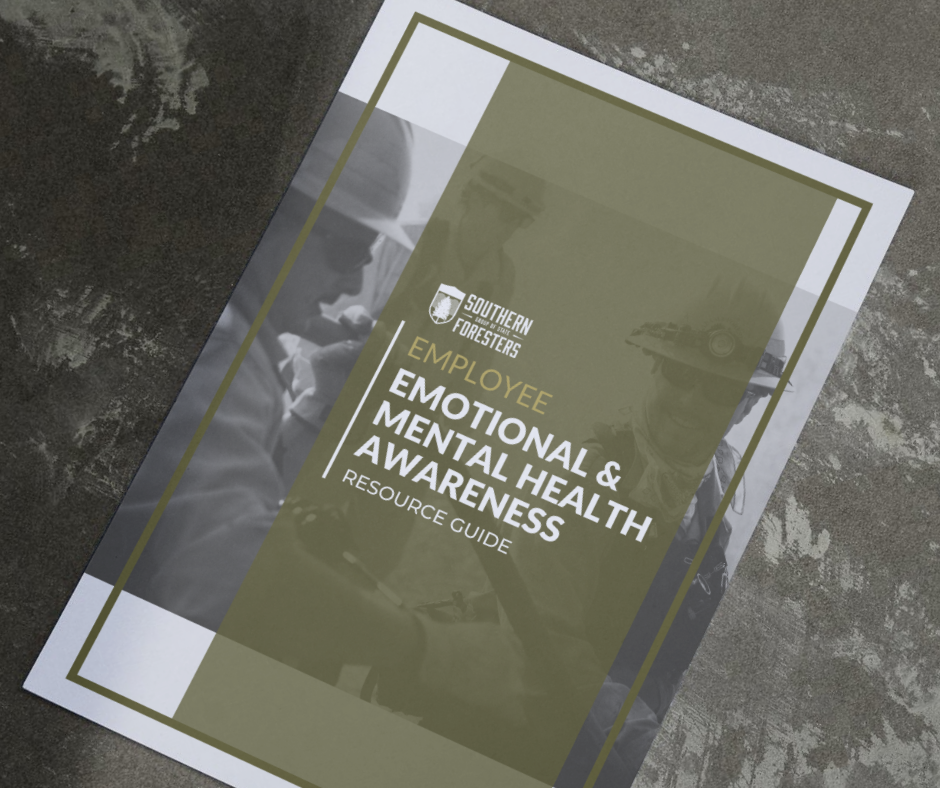
Knowing how specific this kind of loss is to forestry and wildfire work, the Southeast Regional Strategy Committee for the Cohesive Wildland Fire Management Strategy built the Employee Emotional & Mental Health Awareness Resource Guide.
The guide was created by people who have been there. It doesn’t pretend grief is a simple problem to solve, but offers practical tools for individuals and crews trying to get through hard times together. It includes:
- Strategies for coping with grief and loss after traumatic incidents
- Self-assessment tools to help recognize stress, burnout and other mental health concerns
- Information on counseling, crisis resources and first responder support programs
- Guidance for building strong peer support systems and a culture in which asking for help is encouraged.
Remembrance can bring grief back to the surface, and no one should have to face that alone.
Their Memory Lives On
Every wildland firefighter we remember this week leaves behind more than memories. They leave behind lessons, friendships, families who are forever changed, and generations of firefighters who keep showing up because of the example that was set for them.
We honor them by saying their names.
We honor them by learning everything we can from what happened.
We honor them by checking on the wildland firefighters and coworkers left behind after tragedy.
We honor them by making sure any firefighter facing a loss like this knows they’re not alone in it.
As this Week of Remembrance unfolds, may we take time not only to remember those who gave everything, but to reach out to the people still living with that loss today.
Because remembrance is more than looking back. It’s a promise to the people who made the ultimate sacrifice that they will never be forgotten. We will carry their memory forward and keep looking after one another each and every day.
Their watch has ended but their legacy endures.
